Leading with Heart
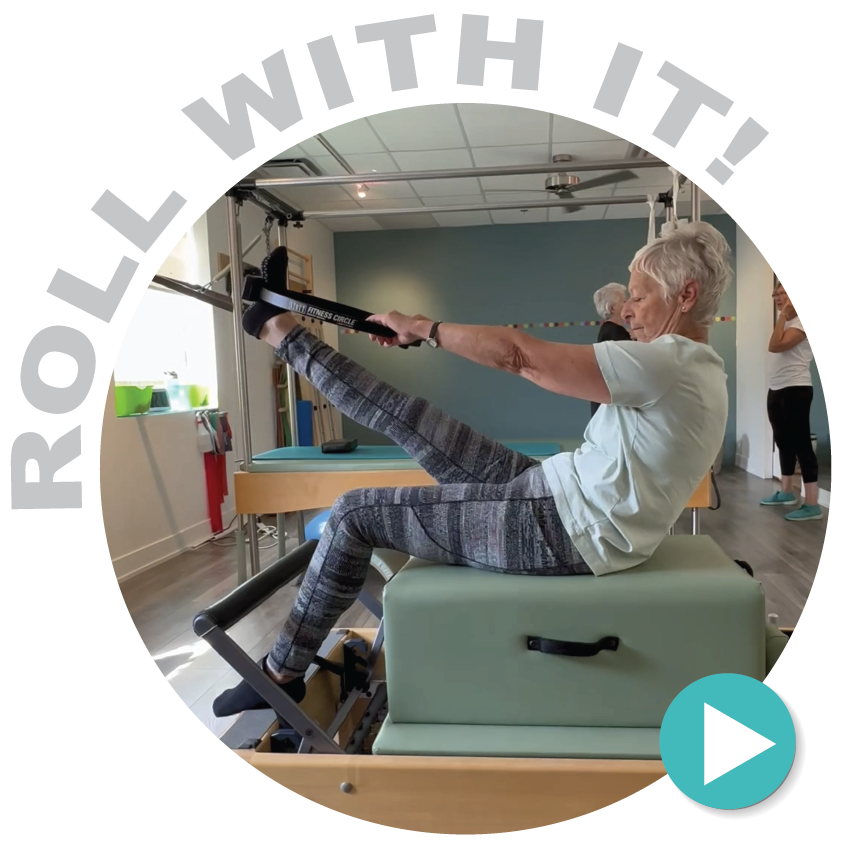
Sometimes you have to roll with it. In Pilates and Life.
We’ve kicked off the 2025 Balanced Body® Pilates instructor training program with a bang. The awesome thing about all these new instructor trainees coming into the studio, is that we start at the very beginning. We go right back to the basics, starting with Movement Principles and Anatomy in Three Dimensions™, and it’s amazing! It’s fun for me to review this work, because it’s an excellent refresher and it hits a little differently every time. But it’s also cool to see people start to make connections between how the muscles and bones work together to produce different movements, and how those movements are essential to Pilates exercises.
Among the first movements that we learn in these courses are spinal flexion, extension, and rotation. Spinal mobility is a key component to overall health and longevity. We often talk about the factors for long life–things like being able to get up from a chair without using your hands, or up from the floor without using a piece of furniture or the wall for support. These are important skills. But spinal mobility plays a huge role in preventing injuries, improving both balance and posture, and it can delay the onset of arthritis. As Joseph Pilates said: “A man is as young as his spinal column.”
Spinal mobility isn’t just about doing a Roll Up or a Teaser. For example, we tend to hold a lot of tension and stress in our upper back, neck, and shoulders. Limited mobility of the thoracic spine–basically, the area around our ribcage–can lead to breathing issues, reduced range of motion, and poor posture. Think about the last time you did the Back Rowing series in your Reformer class, either seated on the box or on the carriage and facing away from the footbar. When you do an exercise like Chest Expansion, pressing back into the straps with straight arms, your instructor likely cues the class to be mindful of the shoulders rounding forward, or the upper back curling into flexion. Spinal mobility can be just as much about the ability to lengthen or extend the spine in Chest Expansion, so that the true muscular targets of the exercise–the teres major, the posterior deltoids, and the latissimus dorsi–are engaged.
Now maybe a few of you reading this post are freaking out because you’ve been told that some of these movements are things you should avoid. If you’re suffering from acute pain related to a herniated disc, or you’ve been diagnosed with Osteoporosis, not every movement is going to be right for you, but instead of Rolling Like a Ball, maybe you focus on your Swan Dive. Or maybe it’s about functional movements, appropriate range of motion, and building strength and balance.
I learned a great lesson from Barbara in our Anatomy training course. After a long first day spent primarily focused on the muscles connected to the hip joint, she ended the session with a demonstration of hip flexion and extension, asking the group what movements she was performing…and there was an awkward silence. To be fair, these days are long and especially after Day One, everyone feels overwhelmed, but it was a bit disconcerting. Instead of dwelling on it, however, I saw Barbara pivot the next morning and start Day Two with a movement class that incorporated all of the content–the movements, muscles, joints, etc.–we’d discussed the day before. And just like that, 14 light bulbs went off. Everyone was able to synthesize the information, taking the technical and visual language and applying it to a physical experience. After seeing how effective this was in real time, I can’t imagine teaching an anatomy course without including a movement component. And it was a good bit of wisdom to acquire–sometimes you have to roll with the situation in front of you, and change your plan on the spot.
I want to send out a sincere thank you to my colleague, Minaqua, who has offered a lot of helpful advice over the years that I’ve been teaching at Retrofit. In the end, I think being a Pilates instructor is about knowledge, ability, and experience, but it’s also about leading with heart. Let’s roll with it this month–follow Retrofit Pilates on social media for insight, exercises and helpful tips on spinal mobility!
And of course, see you in class. ~Pam

Pam Ferguson
Retrofit Master Instructor
Lead Instructor/Operations Associate